
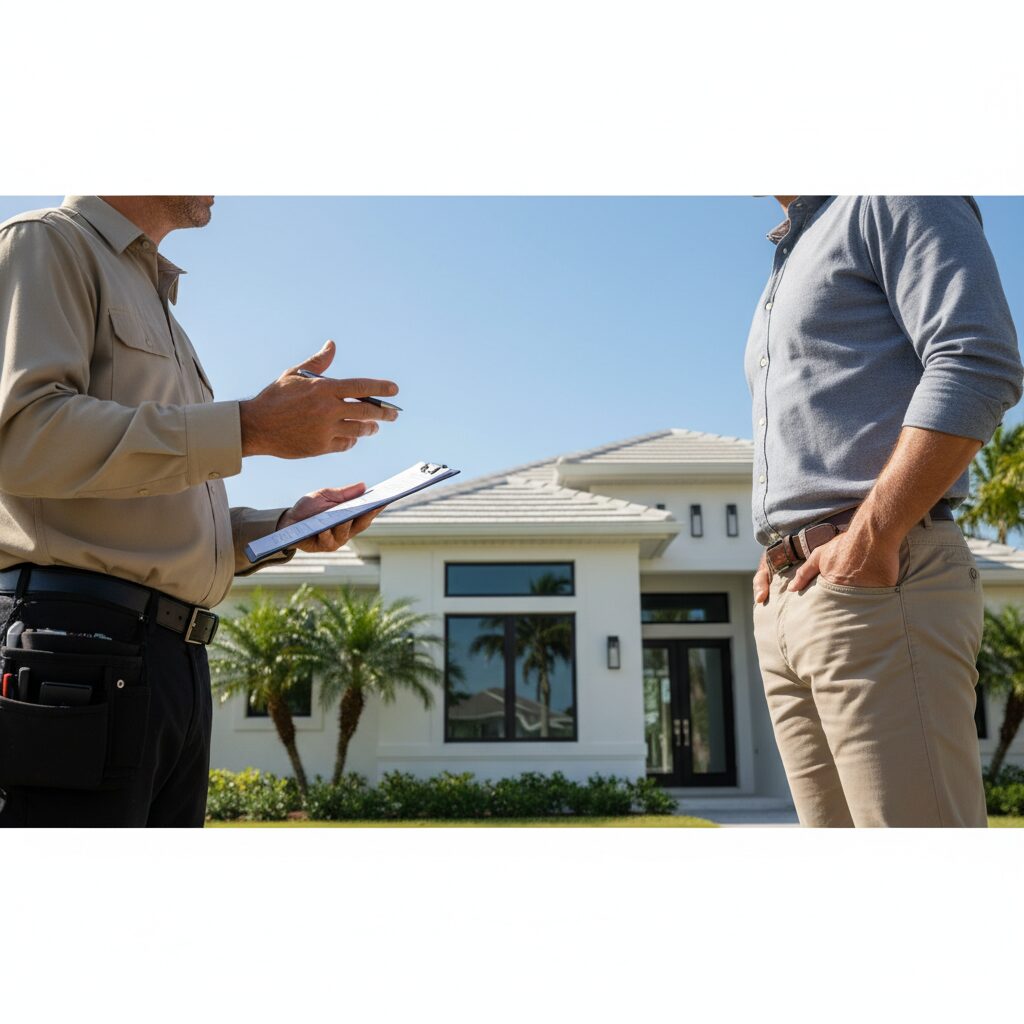
When it’s time for a repair or a full replacement, choosing the right roofing contractor in Broward County is one of the most important decisions you’ll make as a homeowner. A great roofer protects your investment, while a bad one can lead to costly damages, legal headaches, and endless stress.
Unfortunately, the roofing industry can attract unscrupulous operators, especially after a storm. These “storm chasers” often lack proper licensing, insurance, or local experience, leaving homeowners with shoddy work and voided warranties. To protect yourself and your property, it’s essential to do your due diligence. Asking a few critical questions upfront can separate the reputable professionals from the potential scammers.
As a family-owned company that has served this community for over 40 years, we at Superior Roofing Services of South Florida believe in transparency and empowering homeowners. Here are the five essential questions you must ask before hiring any roofing contractor in Broward County.
1. Are You Licensed and Insured in the State of Florida?
This is the single most important question, and the answer should be an immediate and confident “yes.” A legitimate roofing contractor in Broward County will never hesitate to provide you with their license number and proof of insurance. If they deflect, make excuses, or tell you it’s not necessary for your job, that is a major red flag.
Why it matters:
- Licensing: In Florida, a roofing contractor must be licensed by the Department of Business and Professional Regulation (DBPR). This proves they have met the state’s stringent requirements for experience, competency, and financial stability. A license ensures they understand local building codes, especially crucial hurricane-related regulations in places like Deerfield Beach and Pompano Beach.
- Insurance: A contractor must carry two types of insurance. The first is General Liability Insurance, which protects your property from accidental damage caused by the roofing crew. The second is Worker’s Compensation Insurance, which covers their employees if they are injured on your property. Without it, you could be held personally liable for medical bills and other costs associated with an on-the-job accident.
A professional roofer will gladly provide their license number, which you can verify on the DBPR website, and a certificate of insurance. This isn’t just a formality; it’s your primary protection against financial risk.
2. Can You Provide Local References and Examples of Your Work?
A long list of satisfied customers is a roofing contractor in Broward County’s best resume. While online reviews are a good starting point, don’t stop there. Ask for specific, local references—names and addresses of recent projects completed in Broward County. A reputable company with deep roots in the community should have a robust portfolio of work in areas like Boca Raton, Delray Beach, and Lauderdale Lakes.
Take the time to drive by these properties to see the quality of their workmanship for yourself. Does the roof look clean and professionally installed? Are the lines straight? If possible, contact the references and ask about their experience. Were they happy with the communication, the timeline, and the final result? Was the cleanup process thorough?
A contractor who has been in business for decades, like Superior Roofing South Florida, has a long-standing reputation to uphold and will be proud to share examples of their craftsmanship.
3. What Warranties Do You Offer on Materials and Workmanship?
Understanding warranties is crucial for long-term peace of mind when working with a roofing contractor in Broward County. There are two distinct warranties that should come with every new roof, and you need to understand the difference.
- Manufacturer’s Warranty: This warranty comes from the company that made the roofing materials (e.g., the shingles, tiles, or metal panels). It covers defects in the materials themselves. The length and terms can vary significantly by brand and product line.
- Workmanship Warranty: This warranty comes directly from the roofing contractor and covers the installation. This is a promise that their work is free from defects and errors. If a leak occurs due to improper installation, this is the warranty that protects you.
A contractor’s confidence in their own work is reflected in their workmanship warranty. Be wary of companies that offer a very short warranty (e.g., one year) or none at all. A strong workmanship warranty shows that the company stands behind its quality and plans to be around to honor its commitments.
4. Will You Provide a Detailed, Written Estimate?
A verbal agreement or a price scribbled on the back of a business card is not a contract. A professional estimate from a roofing contractor in Broward County should be a detailed, multi-page document that clearly outlines every aspect of the project. This prevents misunderstandings and protects you from surprise charges later on.
Never accept a quote based solely on a low price. A suspiciously cheap bid often means the contractor is cutting corners by using substandard materials, hiring uninsured labor, or skipping essential steps. Your written estimate should include:
- A full, detailed scope of the work to be performed (including tear-off of the old roof).
- The specific types and brands of all materials to be used (shingles, underlayment, flashing, etc.).
- A breakdown of costs for labor and materials.
- Information on handling unforeseen costs, such as replacing rotted decking.
- The project timeline, including a start and estimated completion date.
- Cleanup and debris disposal procedures.
- A clear payment schedule.
- Proof of license and insurance.
Insisting on a detailed estimate ensures you are comparing apples to apples when evaluating different contractors.
5. Who Will Be On-Site Managing the Project and How Will We Communicate?
Effective communication is the key to a smooth roofing project. You need to know who your point of contact will be. Will it be the owner of the company, a dedicated project manager, or a crew foreman? Knowing who to call with questions or concerns is essential.
Ask about the company’s communication process. How will they update you on progress? What is the protocol if they encounter an unexpected issue? A family-owned business often provides a higher level of personal accountability and direct communication, ensuring you are never left in the dark.
A reliable roofing contractor in Broward County will establish a clear line of communication from the very beginning, giving you confidence that your project is in capable hands.
Your Trusted Roofing Partner in South Florida
Choosing a roofing contractor is a decision that will impact your home’s safety and value for decades. By asking these five critical questions, you can vet potential contractors thoroughly and hire a team you can trust.
For over 40 years, Superior Roofing Services of South Florida has been committed to providing our neighbors with honest answers, superior craftsmanship, and lasting peace of mind. We are fully licensed, insured, and dedicated to upholding our reputation in the communities we serve. If you’re looking for a roofing contractor who can answer all these questions with confidence, we invite you to contact us for a transparent, no-obligation estimate. Or give us a call at 954-787-4632.
Frequently Asked Questions (FAQ)
Q1: How long does a typical roof replacement take in South Florida?
A: The timeline for a residential roof replacement can vary depending on the size and complexity of the roof, the materials being used, and the weather. On average, a typical project can take anywhere from 2 to 5 days from tear-off to final inspection.
Q2: How can I verify a roofer’s license in Florida?
A: You can easily verify a contractor’s license online through the Florida Department of Business and Professional Regulation (DBPR) website. Simply enter the contractor’s name or license number to see if their license is current and if there are any complaints against them.
Q3: Do I need a permit for a Deerfield Beach roof repair?
A: It depends on the extent of the repair. Minor repairs may not require a permit, but any significant work, especially that involving more than 25% of the roof’s surface, almost always requires a permit from the city. A licensed contractor will know the exact requirements and handle the permitting process for you.
Q4: What’s the biggest mistake homeowners make when hiring a roofer?
A: One of the biggest mistakes is choosing a contractor based solely on the lowest price. An unusually low bid is often a red flag for unlicensed work, uninsured labor, or inferior materials, which can lead to much higher costs down the road in the form of repairs and property damage.